Signs a laundry wall has been leaking
- A yellow or brown stain low on the wall behind or beside the washer
- Baseboard that is swollen, separating or soft
- Paint bubbling or peeling near the valve box
- Flooring that is cupped, lifting or discolored at the wall
- A musty smell in the laundry area even when the machine is clean
- Moisture on the floor that returns after you wipe it up
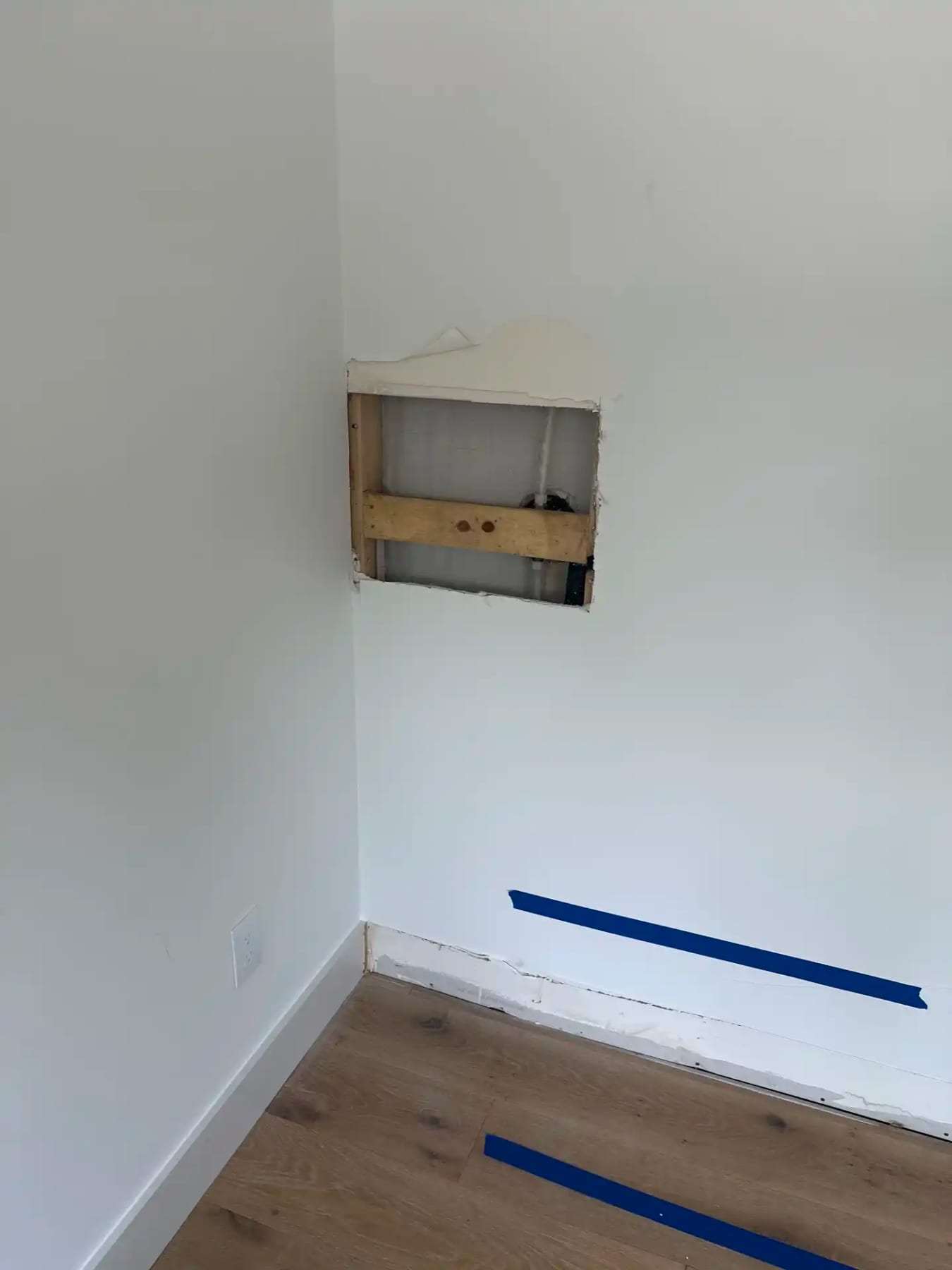
Small inspection opening cut into a wall above the baseboard. One example of what this stage can look like; it is not a job connected to this site.
Why this spot fails
In many mid-century Wheat Ridge homes the laundry hookups were moved at some point, often into a basement corner, a back hall or an enclosed porch. The valves, supply lines and drain box behind the washer are some of the hardest-working plumbing in the house, opened and shut or pressurized every cycle, and they are hidden behind a heavy machine that nobody moves.
A pinhole drip or a weeping valve stem can run down inside the cavity for months. The drywall paper, the bottom plate and any insulation soak it up, and because the inside of the wall is dark and still, mold grows there long before anything shows on the painted side.
Opening the wall without spreading spores
A small, contained opening comes first. The size of the job is decided by what is found inside.
Isolate the room
Close doors, cover the HVAC return and supply registers in the room, and set up plastic sheeting around the work area.
Make an inspection cut
A small opening lets the inside of the cavity be seen and tested with a meter before more is removed.
Extend to clean material
Drywall is cut back past the visible growth and wet zone. Insulation that is wet or moldy is bagged inside the work area.
Clean and dry framing
Studs and plates are HEPA vacuumed and cleaned, then dried and checked with a meter before closing.
Repair the plumbing
Leaking valves or supply lines are replaced, ideally with quarter-turn valves and a recessed box designed for washers.
What to ask before the wall is opened
- Will you check the other side of this wall, too?
- How far beyond the visible stain do you expect to cut?
- Who repairs the plumbing, and when does that happen in the sequence?
- Will the flooring under the washer be lifted to check the subfloor?
- Is the old drywall or joint compound old enough to test for asbestos first?
Common questions
- Can I just replace the valve and repaint the stain?
- Only if the cavity is confirmed dry and free of growth. A stain usually means the inside of the wall was wet for a while, so a look inside is worth it.
- Is a washer pan worth adding?
- A drain pan with a line to a floor drain, or a leak sensor with an automatic shutoff, can catch future leaks early. They do not replace fixing an existing problem.
General information for Wheat Ridge, not a quote or professional advice. In an emergency, call 911.